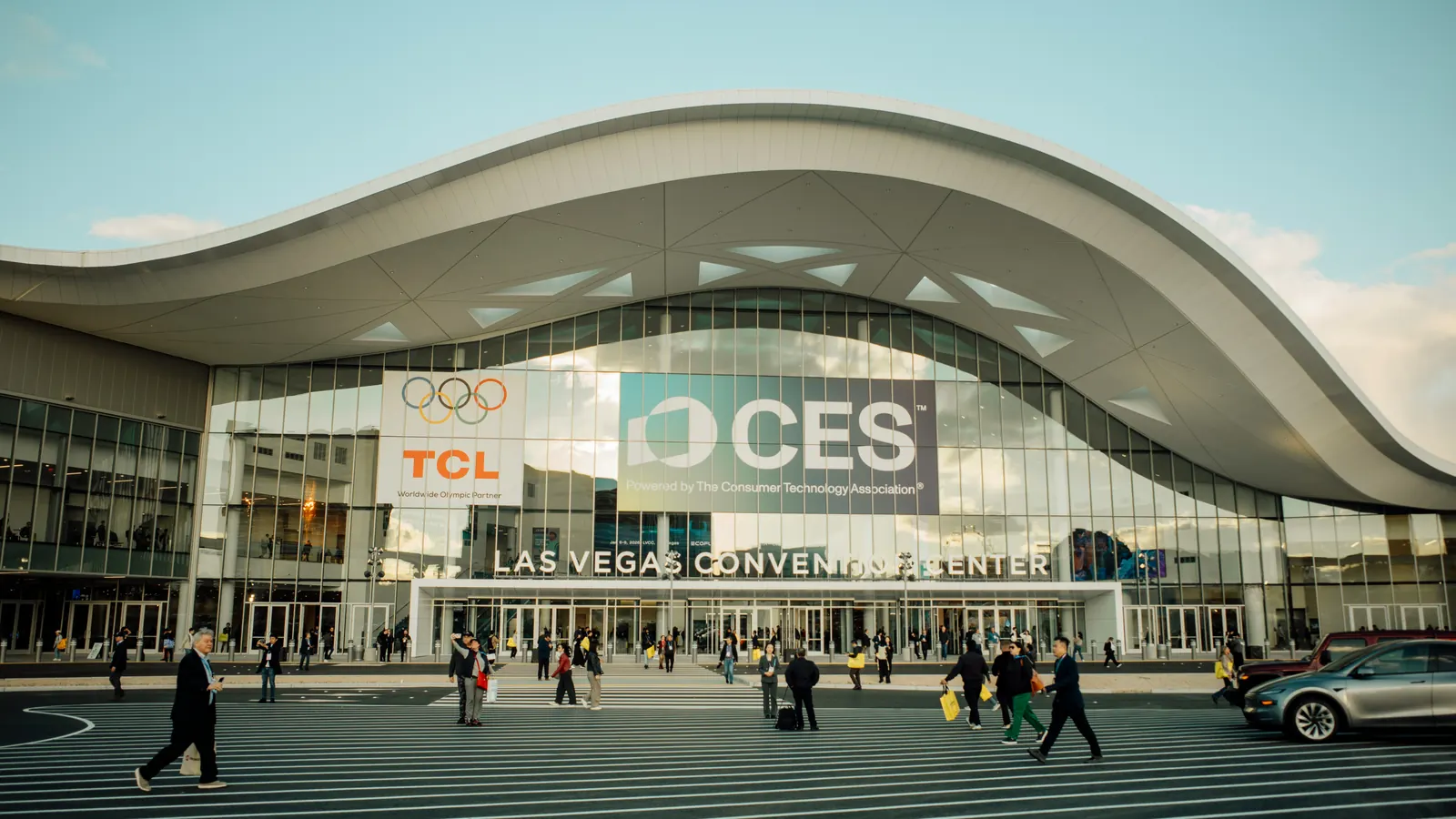
CES 2027 runs January 6–9, 2027 in Las Vegas, at the Las Vegas Convention Center and surrounding venues. Last year’s show drew more than 148,000 attendees and over 4,100 exhibitors, which means thousands of booths competing for the same docks, the same marshalling yards and the same trucks, all in the same few days.
There’s a second problem that catches exhibitors every year: the CES freight window runs straight through Christmas and New Year’s. Advance warehouses close for the holidays, drivers take time off, and carrier capacity tightens just as everyone’s booth needs to move.
Here’s how to plan your CES freight so it arrives on target and doesn’t turn into a surcharge-heavy invoice.
Start with the exhibitor manual
Everything in this guide is general planning. Your exhibitor services manual (sometimes called the exhibitor kit) is the final word. Download it as soon as it’s available and pull out:
- The general service contractor (GSC). This is the company that performs material handling (drayage) at the show. For CES 2027 it’s Freeman. CES also publishes a separate exhibitor manual for each venue (LVCC, Venetian Expo, Mandalay Bay and others), so make sure you’re working from the one for your booth’s building.
- Advance warehouse dates: when the warehouse starts receiving freight and the deadline before late fees apply.
- Your show-site target date and time, if you’re shipping directly to the venue.
- Warehouse holiday closures.
- Material handling rates, both advance warehouse and show site.
- Outbound shipping deadlines after the show closes.
Advance warehouse or direct to show site?
| Advance warehouse | Direct to show site | |
|---|---|---|
| When freight arrives | Days or weeks before move-in | On your assigned target date and time |
| Risk | Low. Freight is confirmed received before you travel | High. Miss the window and you face surcharges, overtime or waiting in the marshalling yard |
| Material handling rate | Usually a bit higher | Often a bit lower |
| Best for | Most exhibitors, especially anyone shipping across the country | Local or regional freight with a reliable dedicated truck |
For CES specifically, we recommend the advance warehouse for most exhibitors. The holiday timing makes direct-to-show deliveries riskier than at a typical show. One weather delay or one missed pickup on December 30 can put your truck behind hundreds of others in the marshalling yard.
Your CES freight timeline, planned backward
Advance warehouses typically start receiving freight about 30 days before move-in. Check your manual for the exact dates. Working backward from a January 6 opening:
| When | What to do |
|---|---|
| Now (late October–November) | Get the exhibitor manual. Confirm booth size and what’s shipping. Book your carrier now, not in December. |
| By mid-November | Finalize the freight list. Crate and skid everything. Get weights and dimensions. Fill out the outbound shipping info early. |
| Late November–early December | Lock in your pickup date. Holiday capacity is already tightening. |
| Early to mid-December | Ship to the advance warehouse as soon as it opens. Aim to have freight received before the holiday week. |
| Christmas through New Year’s | Avoid scheduling deliveries. Warehouses close for the holidays and carrier capacity is at its thinnest. |
| Early January (move-in) | Freight goes from the warehouse to your booth on your target schedule. Direct-to-show trucks check in at the marshalling yard for their window. |
| January 9 (close) and move-out | Your outbound carrier and paperwork should already be set. Freight that isn’t claimed on time becomes forced freight. |
| Mid-January | Freight back at your facility, or stored in Las Vegas for your next show. |
Five CES freight mistakes that cost the most
- Booking the truck in December. Holiday-season capacity is expensive and scarce. Book in November.
- Shipping loose or pad-wrapped freight. Advance warehouses often won’t accept uncrated freight, and anything loose gets billed at higher special handling or uncrated material handling rates. Crate it, skid it and label every piece.
- No certified weight ticket. Material handling is billed by weight. Without a certified weight ticket on the bill of lading, you can be reweighed or billed at an estimate.
- Splitting the booth into lots of small shipments. Each shipment carries its own minimum charge. Consolidate wherever you can.
- Not arranging outbound freight before the show. If your carrier isn’t booked and your outbound paperwork isn’t filed, the GSC can route your freight with its own carrier at its rates.
For a full breakdown of how material handling is calculated and which surcharges hit hardest, read our trade show drayage guide.
Doing more than one Las Vegas show a year?
CES kicks off a full year of Las Vegas shows. If you’re also exhibiting at shows like SEMA, MAGIC, NAB or ConExpo, shipping your booth home after every show and back again is round-trip linehaul you don’t need to pay for. Storing your booth in Las Vegas between shows means it’s already here for the next one. See our Las Vegas warehousing and storage.